Friday, July 10, 2015

ALA Part 3 - AASL Sessions, Storify Summary, & More

This is Part 3 of my ALA Conference reflections. See Part 1 and Part 2.

Besides the YALSA-sponsored young adult author sessions I attended at the American Library Association Conference in San Francisco in June, many of my activities centered around AASL (American Association of School Librarians) events. Here are some of the highlights:

I just completed my second year as a member of the AASL Best Websites for Teaching and Learning Committee, and I participated on the panel session in which we announced and described our 25 site selections for 2015. Here's our slideshow:
And, you can see descriptions of each of the sites here.

I also attended AASL's Best Apps presentation and learned about some great apps I want to experiment with and share with colleagues and students. Here's the link to their presentation and a link to the list and descriptions.

If you have websites or apps you want to recommend for the 2016 list, be sure to submit them on the AASL website. You can submit a website recommendation here and an app recommendation here.

Another session I particularly enjoyed was Nancy Jo Lambert (one of my Twitter PLN buddies) and Stacy Cameron's "Resource Re-Defined: Libraries as Learning Spaces." Both of them are from Frisco USD in Texas. The session gave me a lot of ideas and food for thought on modifications I can make in my library to better attract and serve my students. Both Nancy Jo and Stacy stressed that it's best to start small; even small changes, such as  rearranging furniture and getting a few maker space supplies, can make a difference. Nancy Jo has set up maker spaces in two different elementary school libraries and shared a lot of ideas of what - both tech and non-tech - can be included. She is moving to a brand new high school in the fall, and we got to learn about the design of that state-of-the art facility and how she is planning to run it. I'm looking forward to hearing about her new adventures. Here are is a link to their slides. I so want the Kwikboot charging stations displayed on Slide 14!

While I love attending sessions and make a habit of sharing my observations on Twitter as I do, I could have gone away from the conference happy with just the networking. I met new people, some brand new, some I already know via social media; I renewed old friendships; and I exchanged ideas. I especially enjoyed getting to meet some of the folks who enrolled in the one-month online "Learn to Tweet" class I taught as an offering for AASL leadership the month before the conference. While I missed getting photos of many more people than I took, you can see in my Twitter stream that I enjoyed mingling with lots of old and new friends!

I am embedding myTwitter story of the conference captured through Storify below.

As I went through this Storify, I realized that I didn't mention some key highlights in this and my two earlier blog postings about the conference. So, here are a few more:

One was getting to hear Googler Dan Russell share his vision for the future of libraries, and advice on how we can better serve our students and patrons educating them in being more savvy searchers. As he mentioned, the "the best internet connection is a librarian. We need to be the teachers." He also reminded us that "research skills is not something you learn once and then know forever - keep up!" I couldn't agree more. I have actually hear him speak several times and participated in Google's online searching and power searching classes. I want to take the power searching class again next time it is offered since there is always more to learn, and lots to remember, process, and refresh! Here are the slides from his session.

I was also grateful to get to attend the wonderful breakfast hosted by Alexander Street Press featuring Cynthia Sandburg, an attorney turned biodynamic farmer, sharing the benefits of biodynamics.

And, finally, while I tend to live in a YA world in terms of most of my reading, I was delighted to attend 3M's event at the Terra Gallery where we heard two best selling authors of adult books, Paula McLain and Vanessa Diffenbaugh, share their stories. McLain is the author of The Paris Wife and Diffenbaugh's first book is The Language of Flowers. We were treated to ARCs of their upcoming books. McLain's is Circling the Sun, set in 1920's British Kenya, and based on the life of Beryl Markham. Diffenbaugh's is We Never Asked for Wings, about a struggling mother trying to keep her family together. I can't wait to read them and I am so appreciative of 3M for hosting the event and including me.

Here's my Storify Twitter account of the conference week:



Wednesday, July 8, 2015

ALA Conference Part 2 - YALSA Author Events

Each year, the American Library Association announces the Youth Media Awards during its Midwinter conference in late January. I have never been able to attend this event live, although I do watch the live stream if I can. As a high school librarian, I am always especially keen to learn the awards presented by YALSA, the Young Adult Library Services Association ALA Division, including the Alex, Edwards, Morris, Nonfiction, Odyssey, and Printz Awards. As I am hearing the winners announced, I always wish I could be there to enjoy the group anticipation and excitement as the announcements are made. Really, though, I consider myself very fortunate that I have been able to attend ALA's Annual conference in June, since that's actually when many of the award-winning authors attend, receive their awards, and share about their books. At this year's conference, I had the delightful experience of attending the awards sessions for the Alex, Odyssey, and Printz Awards, as well as a YA Author Coffee Klatch, all sponsored by YALSA. (The Odyssey Awards are also jointly sponsored by ALSC, the ALA's children's library division,)

Printz Awards

The Printz Awards Ceremony and Reception took place on Friday night, the first evening of the conference. This is the second year that program included a panel discussion with the winner and the three honor book winners: Jandy Nelson, winner for I'll Give You the Sun, and honor book authors Jenny Hubbard, Andrew Smith, and the Mariko Tamaki/Jillian Tamaki author/illustrator team. I love that format, since we got to hear from all the authors. I had read all the books, so was excited to hear all of them. One of the interesting topics was how they work and revise. Jandy Nelson shared that it took her two and a half years to write her book, and tons of revisions. She also mentioned that she kept the documents with the two different character's story lines completely separate while she was writing and only merged them at the end. Most of the other authors also talked about a long revision and rewriting process. In contract, Andrew Smith says he writes only one draft! I'm always fascinated to hear about such different techniques.

If you haven't read all of these books yet, put them on your list! Here's a Thinglink image I created for my school with links to book trailers, audio clips, and author commentary I could find:


After the formal part of the session, we got to mingle at a reception for the authors. I was lucky to get to meet three of them. I am always amazed how friendly and open these rock stars are!


The Alex Awards


The Alex Awards recognize 10 adult books with particular cross-over appeal for young adults. Here's a Thinglink image of the 10 that I prepared for my school:


Five of the authors - Anthony Doerr, Kate Racculia, John Scalzi, Zak Ebrahim, and Michael Kortya - were able to attend and speak at the event. I have been working my way through reading these books and was very excited that Doerr, Racculia, and Ebrahim, whose books I loved, were speaking. And, after hearing Scalzi and Kortya, I couldn't wait to read their books also, and made them my first reads after the conference. Each of the books is incredibly different, from Doerr's moving historical fiction based during World War II, Racculia's mystery / ghost story, Scalzi's futuristic science fiction murder mystery, Ebrahim's memoir of living with a terrorist father, to Koryta's contemporary murder mystery set in the Montana mountains. Several of the speeches moved both the authors and their audience to tears, as do the authors' books. These are all also not-to-be missed titles! The last three of the ten are on my "next reads" list.

Odyssey Awards
My third awards event was the Odyssey Awards for the best audiobooks of the year. At this session, the narrators of the winning audiobook and the honor audiobooks speak and read a passage from their books. I had only read one of them, The Scandalous Sisterhood of Prickwillow Place by Julie Berry, narrated by Jayne Entwistle. It is such an amazing experience seeing and hearing someone in person who I had previously known only as a narrator on a recording. Entwistle was captivating both in her recording and in person, and she warmed us all sharing her personal love of books.

Cassandra Morris, narrator of A Snicker of Magic couldn't be there, but we were treated to both the authors and narrator for Five, Six, Seven, Nate!, since Tim Federle served as narrator for his own book. I loved hearing him share how he learned to turn weaknesses, into a strength, even narrating his book despite growing up with a lisp.  Last, we heard from the author of the winning book, H.O.R.S.E. A Game of Basketball and Imagination, Christopher Myers, who also narrated  along with Dion Graham. They brought the event to a wonderful conclusion, sharing their belief in the important skill of listening, and that bringing the narrators to a live event also enriches the experience with conversation.

YA Author Coffee Klatch

One other YALSA Author event I attended for the first time was the YA Author Coffee Klatch. At this event, we all sat at round tables, and, every five minutes a new author came to visit the table and tell us about his/her book. Our table got Jandy Nelson as our first guest! I already knew about I'll Give You the Sun, of course, but it was such fun seeing her again. I also got a second chance to hear Printz Honor book This One Summer author and illustrator Mariko Tamaki and Jillian Tamaki and to hear about their new books. And, all the other authors' books were new to me. We had visits from:

  • Nova Ren Suma, author of The Walls Around Us, the story about a girls' detention center
  • Allan Stratton, author of The Dogs, an intriguing psychological thriller
  • Bill Konigsberg, author of A Porcupine of Truth about two teens on an epic road of discovery
  • Rae Carson, author of Walk on Earth a Stranger set in the Gold Rush era with a fantasy twist
  • Jack Gantos, author of The Trouble in Me, an autobiographical account of some incidents in his troubled teen years
  • Martha Burkenbrough, author of The Game of Love and Death, a fantasy and historical fiction set in 1937 Seattle
  • Ginny Rorby, author of Hurt Go Happy & forthcoming How to Speak Dolphin, both exploring issues of teens with disabilities. 
So many wonderful new options to read and share with my students! Here's my take home piles of all the books to add to my library collection and ARCs (advanced reader copies) to share with students and teachers:

You can tell how I'll be spending a lot of my summer vacation ....


Many thanks to YALSA and all the wonderful authors and publishers for these great opportunities to learn more about books and authors that will enrich my library and reach my students.

For more about my ALA Conference experience, see my last posting, "The ALA Conference: A Perfect Time and Location." I'll also be writing one more posting focusing on the AASL events I attended.

Monday, July 6, 2015

The ALA Conference - a Perfect Time & Location


I'm back from a short vacation trip after the American Library Association Conference and starting to process my takeaways. ALA couldn't have picked a better location, time, and opening keynoter for its 2015 Annual Conference.

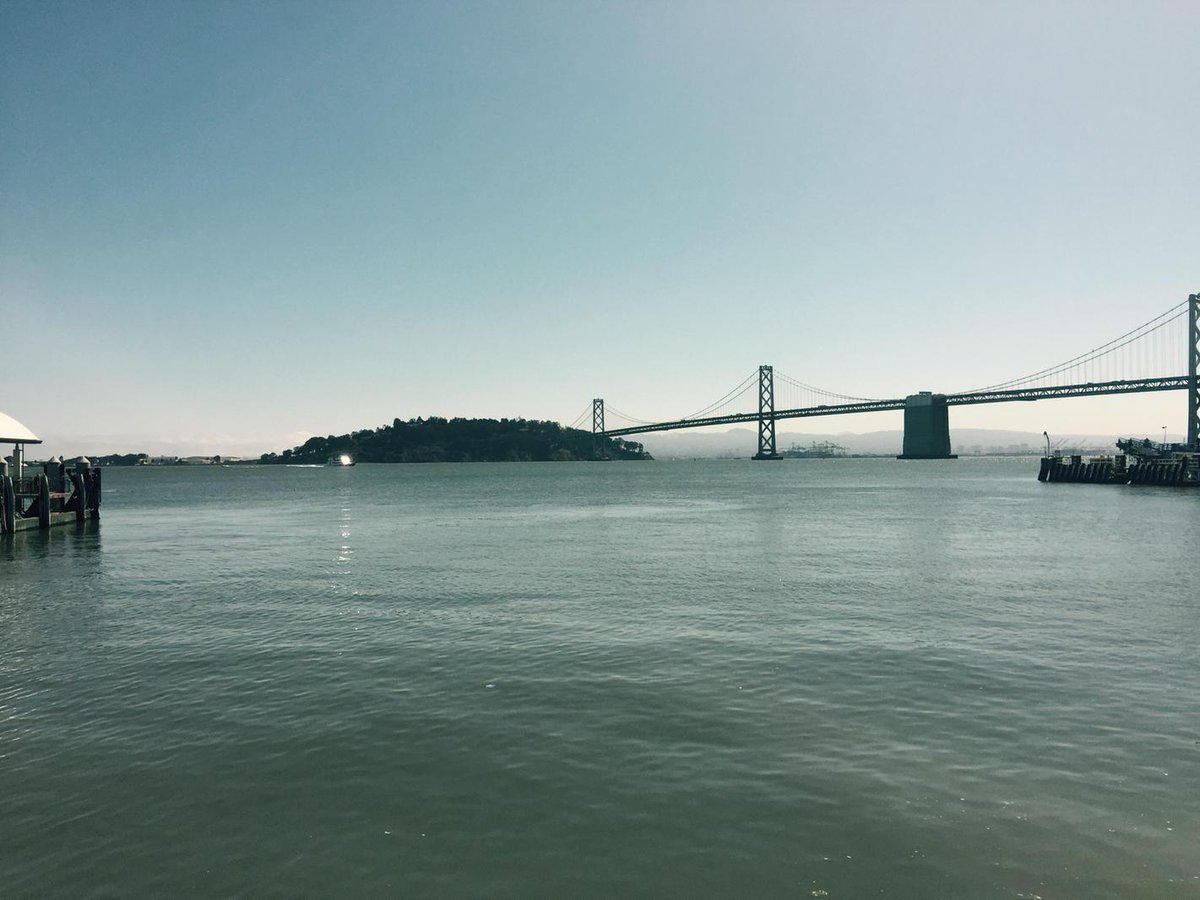
The location ... San Francisco is one of the most beautiful and forward-thinking cities in the world. I never get tired of opportunities to visit and enjoy its unique Victorian architecture straddling its hills; striking views of the bay, ocean, and bridges; and lively atmosphere and people-watching. As I tweeted Friday morning during a visit to the Ferry Building before heading over to the conference:

Doesn't get prettier than this!! San Francisco for


The time ... The timing for the conference was perfect. Friday morning, June 26, the Supreme Court announced its ruling on Obergefell v. Hodges, making same-sex marriage legal in every state of the United States. It seemed that all of San Francisco was abuzz with excitement about this landmark decision.

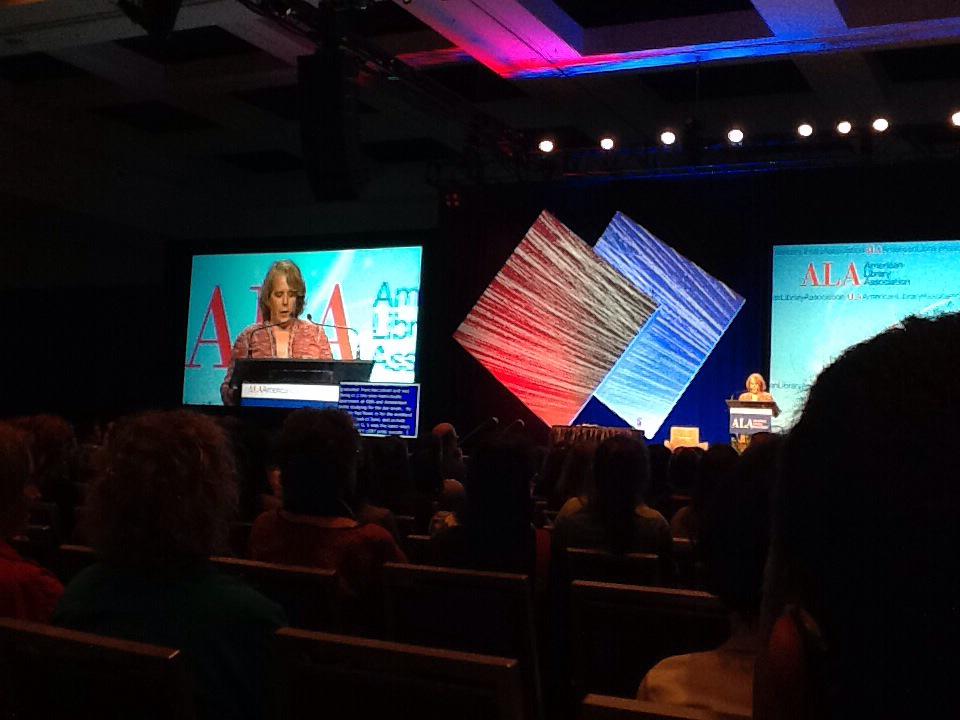
The keynoter ... Then that afternoon, the ALA conference opened with keynote speaker Roberta A. Kaplan, the attorney who argued before the Supreme Court in 2013 on behalf of the previous landmark case for gay rights which struck down the Defense of Marriage Act (DOMA).

Getting to hear Kaplan's personal story and her perspective on how positive legal changes can and do come about and the progress that has been made in protecting gay rights was inspiring and especially moving on such an historic day. It's so easy to get discouraged about all the inequities, injustices, and prejudices our nation can't seem to address or eliminate. Kaplan reminded us that positive change can happen, both in our legal system and peoples' attitudes. Here was one of my tweets during the session:

Heartening 2 hear Roberta Kaplan share her experiences, peoples' ability 2 grow, change, today's decision

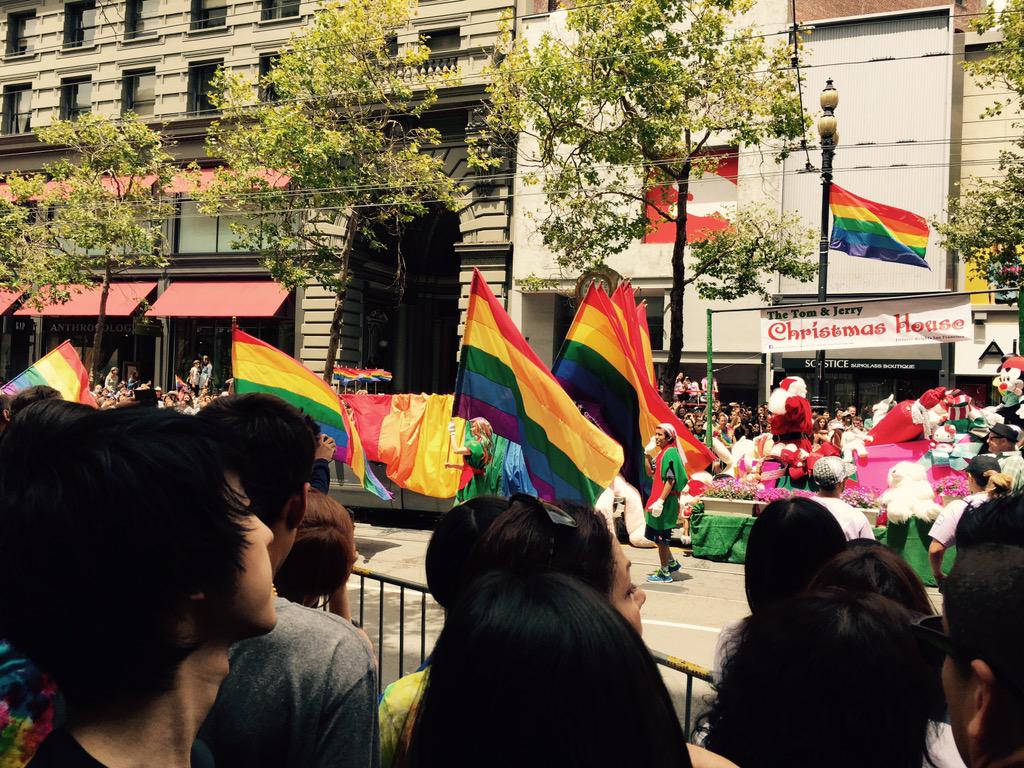
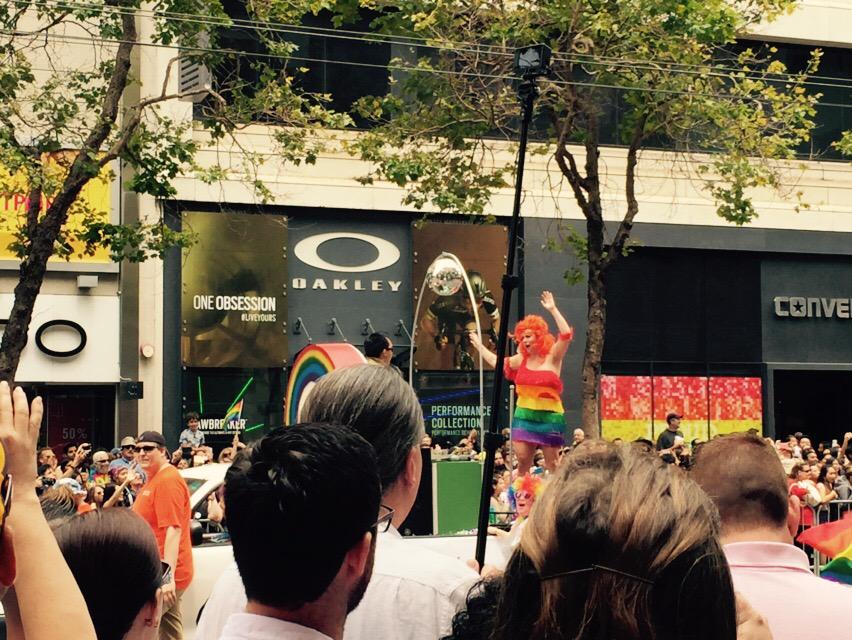
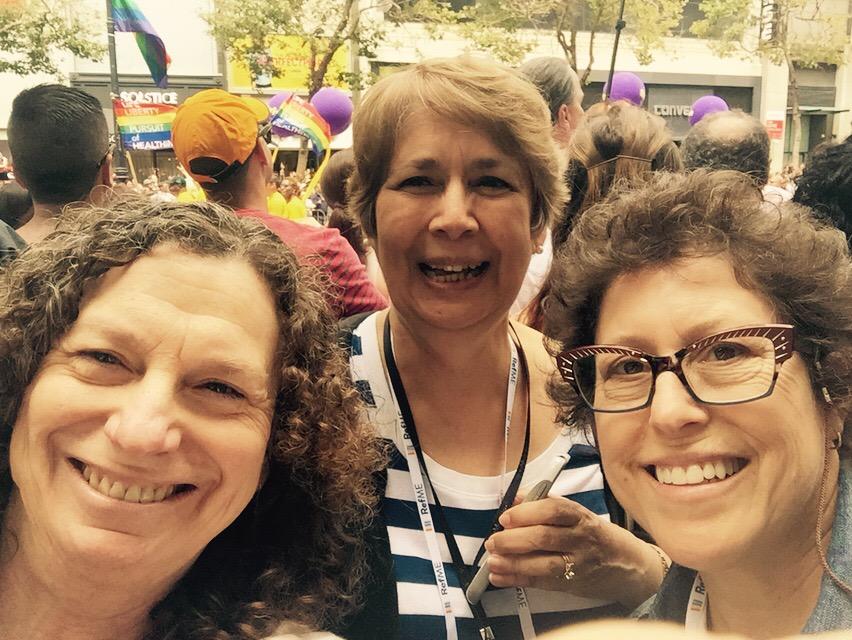
The time, the location ... And, two days later on Sunday, San Francisco's annual Gay Pride Parade passed just blocks away from the Moscone Center, giving conference goers an easy opportunity to view the parade and witness the amazing positive energy of the crowd. Everyone was in a great mood; everyone was courteous. Although my view of the parade itself was poor, being about four rows back from the curb, so my photos were also poor, the experience was no less exciting.

Here were my tweets from the parade:
Hanging out with my librarian friends watching the gay pride parade

(That's me with Rosemarie Bernier and Marcy Drexler, both teacher librarians from Los Angeles USD.)

I'll be working on more posts with other personal highlights of the conference, but I wanted to start off with this short one sharing why being at this conference in this time and place felt so special. As I posted on Twitter Saturday morning:


 @jane_librarian 
Couldn't have had better day yesterday than being in SF, at #alaac15, learning Supreme Court decision, hearing @kaplanrobbie, #Printz awards
I was also super jazzed to have Roberta Kaplan favorite and retweet this!

Thanks to the American Library Association and all its leadership and conference planners, San Francisco, Roberta Kaplan, and the Supreme Court for making this a very special time for me!


Sunday, June 21, 2015

My Library Annual Report

I officially began my summer vacation on Friday, but I was determined to get an annual report for my library finished before trying to relax. Here it is. It includes positives, as well as a few challenges I hope my administrators will consider. Please share any comments and anything I may have left out.


 For better viewing, go to this direct link.

In case you are interested in how I made this, I created the graphics in Canva.com, one of my favorite graphics tools. Then, I brought it into Thinglink.com to add the extra items (text, weblinks, videos) you can access when you hover over icons. I used the same two tools for the Printz and Alex Award book image on the Summer Reading page I made for my library site to support the English Department's new summer reading assignment.

 Have wonderful summer! I'm excited to be off to the ALA conference next week!

Sunday, June 14, 2015

Getting Ready for a Conference and Making the Most of It


The annual American Library Association Conference is coming up in less than two weeks! Everyone who knows me knows that I'm a self-confessed conference "junkie." Ever since my first California School Library Association conference in 2002, I haven't been able to resist the chance to attend a professional conference. Why? ... Here are at least some of the reasons ...

  • Conferences take me away from the frequent isolation I often feel at work, being the only one who does what I do, and give me a chance to connect with peers who understand and have wisdom to share to help me past hurdles. The advent of Twitter and other social media in the last few years definitely helps to alleviate that isolation, but there is no substitute for frequent doses of live interaction. 
  • Conferences inspire me with new ideas and infuse me with the energy to try applying those ideas.
  • They give me a chance to contribute. Even if I am not presenting a session, I always make sure to volunteer and be an active participant in some way. 
  • And, then there's the fun ... I love getting to hang out with friends old and new, attend parties and special events, see new places, and enjoy any perks such as free books and other products.

So what can you do to best prepare for and take advantage of a conference? I have benefited in the past from a number of colleague's suggestions, especially Gwyneth Jones' packing posting.

Here's a few of my personal suggestions, both for what to do in advance and during the conference:

Follow the Conference Twitter Hashtag

Even if you aren't already a big Twitter user, you will want to create an account to at least follow Twitter postings about the conference. (And, if you aren't tweeting, make that a goal!) Find out what the hashtag is and start searching for it on Twitter to hear about sessions going on, people attending, etc. before you arrive at the conference, and live updates while you are there. The official ALA Conference hashtag for 2015 is #alaac15. One thing that makes me sad is that - other than one year - I always miss the ISTE conference, which happens almost simultaneously with ALA. The good news is, that by following its hashtag - #ISTE2015 - I will be able to take advantage of at least some of it virtually.

Clothes and More

Go for comfortable shoes, since you will be doing a lot of walking. As for clothes, I try to go for simple and easy-to-layer items. It often gets cold in convention centers and meeting rooms, but I don't want a lot of weight to carry when I want to take a sweater or jacket off. During the summer, I go for light-weight layer-able sweaters that won't crush if I wad them into my bag. I also try to stick with one, or at most two, color schemes, so that my clothes easily mix and match without needing a lot of different shoes, purses, and so on.

Electronics

Make sure to bring all your computer and cell phone chargers. I also always carry a cell phone power booster and a Belkin min-travel charger with three charging outlets and two USB outlets. Thank you to Gwyneth for helping me discover this.)  It gives me additional outlets in my hotel room if I need them, and allows me to share the all-too-rare outlets in conference meeting rooms.

And, if you are a Mac person and you are presenting, don't forgot the most frequently-forgotten conference item: your dongle.

Business Cards

Plan to have plenty of business cards to give out to new colleagues you meet and to vendors in the exhibit hall you want to contact you and those who are having drawings. These days, at many conferences vendors may be able to scan your badge, but it is still a good idea to have cards. Cards can be either informal ones you make yourself or ones that your school or district supplies. I do have cards supplied by my district, but I still like also having my own, since I can include more of my own information on them. Here are my latest cards, made with MOO.com. I like the cool options, like rounded corners, that it MOO offers. Another thanks to Gwyneth Jones, the Daring Librarian, for sharing Moo with me several years ago. One side has all my work information; the other is my volunteer/personal professional information:


If you decide to use MOO, use this link if you would like a 10 percent discount on your first order. It will also give me a small credit on my next order.

Mailing Label Stickers

It's also a good idea to print out several sheets of mailing label sized stickers with your basic contact information (name, title, place of work, address, email, phone number) in case a vendor has slips for you to fill out for information or contests. Instead of writing out information, you can simply attach the sticker to save time writing anything out.

Go Over the Program in Advance, Then Reassess As You Go

I rarely decide in advance on every session I want to attend at a conference. In fact, it would be foolish not to be flexible, since I always learn about sessions, demos, events, etc. while I am there and attending other sessions and networking. Nevertheless, it makes good sense to go over the online program in advance and schedule yourself for at least some of your time slots. That relieves some of the stress of deciding on sessions on the fly and helps you avoid missing something you will really regret not getting to. Then, once I am at the conference, I take a little time each day to reassess my schedule and add and delete items based on the final program and what I learn through networking with people there. When I go over the program, I go for sessions both by topic and by presenter, and often more by the names of presenters I know through my Personal Learning Network (PLN) on Twitter, blogs, and other social media than topics. If one of my PLN rockstars like Joyce Valenza, for example, is presenting, I'm going to go to her session regardless of the topic, since I know I will get valuable content. 

I used to fill up my schedule with a session during every single concurrent session time slot. I have learned over the years that overbooking myself isn't always the best policy. Allow for some time in the exhibit hall, for networking with old and new friends, and simply for catching up with yourself if necessary. No matter what you do, you can't get to everything, so don't feel like you have to max out every hour or get stressed about the sessions you didn't get to. The good news is that, at every conference, you will have a chance to view some recordings, find session handouts, and read Tweets from many of the sessions you miss. 

When I say to go over the program, there is almost always a print and online option for doing that. I like taking advantage of the conference mobile app if there is one, but it also helps me to see a print program. It's a matter of style which works best for each person. I've found that I appreciate access to both, since - just like print versus ebooks - they both have advantages and disadvantages for searching and scanning. 

Lighten and Balance Your Load

Try, if you can, to resist picking up more books and/or brochures in the exhibit halls than you will really read. Vendors understand that you may prefer the online version of their brochures. Still, I always end up picking up a lot of materials, and it gets heavy quickly. Here's a few things I do to keep the weight down and handle what I am carrying as easily as possible:
  • I always bring one of my favorite cloth bags from a previous conference. Even though I know I will undoubtedly receive a bag at registration, I want to have one that works best for me. (I also am always happiest carrying around one of my favorite colors. :-)) I try to go for one that has at least one small compartment that I can use in place of a purse. 
  • To save weight, I leave my purse, and often even my wallet, behind and just carry my room key, some cash, credit card, and few essential items in my conference bag. If the conference gives you a nice badge holder with compartments, you can also opt to keep your credit card, room key, and cash in it. 
  • If I get carried away in collection things, as I often do with books at library conferences, I accept vendors offers for free bags to supplement my basic one. It always works best to balance my load with multiple lighter bags over both arms instead of one.
  •  If you end up with more than you can comfortably carry, its worth taking advantage of check stations or going back to your room to drop stuff off. Don't make yourself miserable carrying tons of stuff around all day. 

Don't Be Afraid to Leave a Session

If you get to a session and it isn't what you were hoping for, don't hesitate to leave. Time is too precious to waste it in a session you aren't benefiting from. Every presenter has to understand that some people will decide not to stay. 

Meet New People!

Even if you come to a conference with friends, make sure that you branch out and meet new people. Expanding your network of colleagues and friends is a lot of what makes conferences valuable. Don't spend all your time either being all by yourself or with people you already know. Balance your time between doing things on your own, with any old friends, and with making new friends.

Taking Notes

How you take notes at sessions is a matter of personal style. I used to have a notebook or note paper and would also often write my notes on the handouts provided by presenters. Then, once I started bringing a laptop with me, I started taking notes on it. To this day, I am more comfortable carrying my laptop with me despite its weight than doing extensive typing on my iPhone. But, I am always grateful that I have a smart phone when the wifi isn't working. And, even when I do have wifi, I typically now tweet in place of taking traditional notes. I search for the conference hashtag and the session hashtag if there is one, and watch and follow these during a session. I tweet out what strikes me as important. At the same time, I can see other people's tweets at the same session. That saves me from having to capture all the information myself. Afterwards, I can go back to the tweets to help me process my thoughts. 

Following Up Afterwards

If you are like me, you will come home from your conference exhausted and in need of a vacation! Nevertheless, do yourself a favor and plan some time to process what you learned soon afterwards. Otherwise, it will be much harder to get back to the ideas and take advantage of them later. There are probably as many different ways to "process" conferences as people. Here's a few of the things I try to do:
  • Go through my piles of books, brochures, etc. and organize them by priority, discarding whatever I no longer need.
  • Storify my notes. I mentioned above that my "notetaking" tool of choice has become Twitter. Along with Twitter, I use Storify.com to assemble my Twitter "notes" and those of others to assemble a "story" of my experience. Once I do this, I always share my "story" on Twitter. Here's an example, my Storify from the CUE 2015 conference.
  • Set up a "to do" list with a few goals of activities, based on what I learned, to carry out:
    • within a week or two
    • within a month or two
    • within the year
  • Share my major takeaways and goals in a blog post. This forces me to reflect and set goals. I used to share reports with my administrators. Now, I do this as a public posting. 
  • Spend some time finding the presentation files and handouts for those sessions I didn't get to attend but want to learn from. Sometimes, these will be among my best takeaways!
  • Do my best to keep in touch with people I met. Twitter is probably the easiest way to do that. 
Enjoy the ALA Conference, ISTE Conference, or any other events you are attending, and please share!

Sunday, May 3, 2015

CUE Beach Cities / Los Angeles Event


I had the pleasure yesterday of attending the CUE Beach Cities/CUELA event at Westerly School in Long Beach. Both the Beach Cities and the Los Angeles CUE affiliate groups did a great job putting on the morning workshop.


My dear friend Pam Oehlman and I did a presentation about the AASL Best Websites for Teaching and Learning. Each year, the AASL Best Websites Committee selects 25 notable sites that can be used by educators and students to enhance learning. We shared a selection of the 2014 sites and suggested ways that they can be used in the classroom by teachers and students. As part of the presentation, attendees also got some hands-on experience with Kahoot, Socrative, and Stoodle.

While they don't really stand alone, here are the slides we presented uploaded to slideshare.com:


You can also view them in Google Presentations at bit.ly/AASLBestSitesCUE.

I hope they will whet your appetite and inspire you to contact us for more information and ideas of how we recommended using them.

I'd like to thank the CUELA and Beach Cities CUE boards for inviting us to speak. I also got to meet and network with a group of impressive educators there. It was a great morning.


Guest Editing the CUE Blog


I have been delighted and honored to serve during May and early June as guest editor of the CUE Blog. In this role, I both wrote posts and solicited and edited posts by other writers. Please visit there and comment and/or share to Twitter, Facebook, and Linkedin.

Here are my postings:
To comment on a posting, you need to display it on its own. You won't see any previous comments or an option to add a comment when you are viewing a posting through the full blog.cue.org link. So, just click on the title of a posting to display that posting on its own, and the comment feature will appear at the bottom.

Updated 6/11/15